
How to Write a Blog: Part 1 (Members Only)
There’s a daily kitchen conversation between my husband and I that goes something like this:
“Tell me what you want for supper tonight?”
“I dunno. What do you feel like cooking?”
“If I knew that, I wouldn’t be asking what you want.”
If you’ve been married—and cooking—as long as I have, you know that the hardest part of meal prep is coming up with fresh ideas instead of the same meals week after week. Writing a blog is like that—the hardest part is finding an idea. Even this blog was suggested to me by our content coordinator. (Thanks, Brenda!)
So how do you come up with ideas when your partner evades the question with another question and you don’t have a content coordinator? Call me old school (or behind the times), but one way to find ideas is through an online search. Simply type “blog ideas for authors” into your search engine and, voilà, thousands of articles and ideas. You might fine-tune your search: “blog ideas for fiction writers” or “blog ideas for brand new authors.”
You can do the same thing using AI. Here’s where I admit I had never used AI before, but it was time for me to give it a try. I asked Grok (but you can use any AI assistant, like Gemini, ChatGPT, etc.) to create a list of author blog topics. Grok produced a list of 15 items. When I asked Grok again later, I got a different list, this time with bulleted points. I liked this list much better. So do experiment with asking the questions, just don’t waste too much time on it.
Now that you’ve got a list of ideas, pick one. It doesn’t matter which one. Treat it as a writing prompt and just start scribbling (or typing). Maybe that idea becomes a finished blog or maybe it remains a warmup exercise. If the latter, try a different idea and keep writing.
Other sources of inspiration are blogs by your favourite authors. What are they writing about? Can you borrow one of their ideas? I hope you are following at least one author’s blog because art inspires art.
One author blog that I follow is by Terry Fallis. I was a fan long before he became the guest speaker at our London Writers Society event in 2023. (He’s been an LWS advocate ever since, and vice versa.) If you’ve ever chatted with Terry, you know he’s a warm, down-to-earth kind of guy and that comes across in his writing. (Another reason to follow an author is to get a sense of different blog writing styles.)
In one of his blogs, Terry wrote about books in his office. It inspired me to write “My Top Shelf” and “What Does Your Bookshelf Reveal.” Another blog, “My Parents’ Writerly Influences” was also sparked by one of Terry’s blogs.
I also follow Gretchen Staebler, author and “caregiver ally.” I discovered her memoir Mother Lode: Confessions of a Reluctant Caregiver when I was writing my memoir If I Could Remember: Bears & Brains & Caring For My Mother (coming soon!). Gretchen’s style and content is different from Terry’s. She often talks about aging, death and dying. It freed my voice for my blog “Last Rose of Summer.” (Her blog also emboldened me to ask her to write a blurb for my memoir’s book cover. And she did!)
Pádraig Ó Tuama is a poet blogger. Again, different style. He always presents a poem, then dissects it, connects it back to his life, his thinking, his writing. Remember…art inspires art. Sometimes the poem’s message or theme will inspire me, other times it’s just a line or even a single word that gets the creative juices flowing.
And the last source of inspiration I want to mention is going to the Source itself. It’s where I ask for ideas, what some might call ‘setting an intention.’ Basically, just before falling asleep, I put it out there:
“Bring me a blog idea.”
Whether you are speaking to the Universe, The Writing Collective of All Authors Past, Present and Future, or simply seeding your dreams, it doesn’t matter—the instruction works!
This has become a reliable method for me to get ideas which typically arrive next morning during that half-awake time just before dawn. It may take practice to start paying attention to those dreams, those messages. But, hey, isn’t that what authors do—pay attention? To details, to scenery, dialogue, mannerisms…dreams.
In summary, these are some ways to get author blog ideas:
- Online searches
- Ask AI
- Get inspiration from other authors’ blogs
- Set an intention
- Hire a VP and assign her the task of feeding you great ideas
But forget about getting ideas from your partner. It’s meatloaf again at our house tonight.
***
So, this was Part One of How To Write A Blog. Notice how I talked about my writerly life, made it personal. I also slipped in names and links for my books and blogs without shouting BUY MY BOOKS. And I spoke about other writers, acknowledged their work, gave them a shout-out (because writers support other writers).
All of this is Marketing 101. That’s what a blog does—markets you and your writing. There’s no need to make it pushy, high pressure marketing. Keep it a soft sell. Most of all, just be yourself.
The following parts of How to Write a Blog are available to members only. Isn’t it time you became a member?
Part 2—Setting The Blog Parameters
Part 3—Getting Blog Followers
Part 4—Publishing Your Blog

Donna Costa, President of the London Writers Society and author of If I Could Remember: Bears & Brains & Caring For My Mother, has written a tender and heartbreaking story of caregiving for her mother, who had Alzheimer’s. She blends memoir, fable and medical fact into an honest, sometimes raw, account of the changes faced by Alzheimer’s patients and caregivers. Learn more at donnacosta.ca
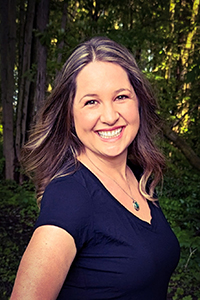 Martha Morrison is honoured to have served as Chair of the Anthology Committee for the London Writers Society’s inaugural anthology project Out of the Woods. She holds a BSc in Biochemistry and an MFA in Creative Nonfiction writing. Her work has been published in various literary anthologies and she was shortlisted for the International Amy MacRae Award for Memoir. Her previous careers include flight attendant and professional ballroom dance instructor. Martha lives on a farm outside London with her family, dogs, cats and chickens. Most days, she gets up before the rooster (and the kids) to write in the quiet early mornings.